Posted by Dan DaSilva on December 21st, 2009 | 
The UN Climate Change Conference in Copenhagen convened last Friday. Unfortunately, due to lack of free (and working) internet access during my visit, I wasn’t able to update the blog as often as I wanted. However, here is a roundup of the second week migration and displacement events that I attended at COP15 as well as some thoughts about the issue as a whole in relation to the entire Conference.
The draft agreement which contains the entry referring to climate change and human mobility, has not been adopted at this COP. This would be just one of the many reasons people say the talks failed. According to this document made available on the UNFCCC website, the text will continue to be worked on by Parties and further narrowed down in future climate talks. In regards to the actual paragraph itself, according to this article “many have sought to alter the passage and Australia has attempted to water it down and has requested more research.”
The “CARE and Migration” panel talk was cancelled. This was most likely due to the fact that many of the civil society observers that were supposed to be speaking at various events were not able to gain entry into the Conference venue due to logistical issues, so many ended up cancelling their trip to Copenhagen altogether.
The event “Climate adaptation continuum, migration and displacement – Copenhagen and beyond” at the Conference last Wednesday was well attended and progressive with the issue. It had a very distinguished panel and included William Lacy Swing, Director General of IOM, and António Guterres, the UN High Commissioner for Refugees. Among the issues discussed at the side event, the notion of increased illegal human trafficking and smuggling was brought up by the panel in regards to a possible continuation of lack of formal and legal recognition of climate migration. The future challenges of incorporating migration into adaptation strategies also continued to be discussed. Check out this page for a more comprehensive summary of this event.
Here is the webcast from the press conference, “UNU, UNHCR and IOM: migration/displacement and climate change” which took place last Wednesday. It seemed very rushed but many important questions from the press were addressed by the panel.
During the side events, it seemed that for every one question from the participants, there were more questions raised. Delegates from Bangladesh asked many questions and pleaded their case at every migration event I attended. They are on the front lines of climate change and for them, this was an opportunity for the people at the top to hear their voices.
Overall, the issues of migration and displacement from the effects of climate change were not addressed properly at COP15, as mitigation measures were still the predominant focus. Although climate migration and displacement is currently happening around the world, it is still fairly new on the international agenda and much remains to be done. However it is very clear that concrete action is needed right now in the most vulnerable and affected countries, regardless of formal recognition in a legally binding treaty.
As a side note, I also had the chance to see the documentary film “Climate Refugees” by Michael P. Nash. Although I strongly disagree with the message that climate migration is a national security threat for developed countries in which this film graphically portrays, I still think there are some good interviews and comments made as well as ways forward to help mitigate the effects of climate change.
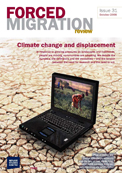
There are a few publications that were released during or just before COP15 that you should be aware of. The first is “Climate Changed: People Displaced” by the Norwegian Refugee Council (NRC). This is an excellent thematic report which aims to raise awareness of displacement as one of the humanitarian impacts of climate change. The lead author of this report, Vikram Kolmannskog, also published the working paper “Climate change, disaster, displacement and migration: initial evidence from Africa” for UNHCR’s “New Issues in Refugee Research” series. The report presents evidence from Burundi and Somalia, which are among the most vulnerable countries in the world.
Another one is by IOM and is entitled “Migration, Environment and Climate Change: Assessing the Evidence”. The book focuses on seven key areas of research relating to the topic of migration, the environment and climate change, covering issues such as data challenges, research methods, sudden environmental and slow-onset events, and policy responses.
Lastly, here is a press release by IOM entitled “Greater efforts needed to tackle environmental migration beyond Copenhagen”, which was released on International Migrants Day on December 18, which also happened to be the last day of the Conference.
Here are a few more pics from inside Bella Center and around Copenhagen, as well as some from the side events I attended in the second week. A special shout-out to all of the readers of the blog that I had the honor to meet in person at the Conference!
We cannot display this gallery
Posted by Dan DaSilva on December 13th, 2009 |
The first of the two-week UN Climate Change Conference has wrapped up. During the climate migration and displacement events, which were well attended, numbers and terminology continued
to be discussed and debated. Although it is widely agreed upon that drafting a new treaty to address climate migration and displacement may be the best option, it seems as though many of the delegates from the smaller Bangladeshi NGOs were pushing for status as “climate refugees” as they argue the 1951 UN Convention Relating to the Status of Refugees is dangerously looking out-of-date and should be amended.
At the “Climate Change and Migration: Transformations or Humanitarian Crises?” event at Development and Climate Days, many issues were discussed such as migration as adaptation as well as the notion of national security versus human security in the climate migration discourse. Loss of culture and identity was also discussed when talking about entire relocation of a nation such as Tuvalu.
Here is a good article from Reuters that covers the “Kiribati: Our road to Copenhagen” side event at COP15. During the event, the people of Kiribati made it apparent that they hold a disheartened attitude from the reluctant possibility of long-term relocation through the means of skilled migration programs in other countries.
This week the climate negotiations continue along with numerous other events at the Bella Center and around Copenhagen. Things will come down to the wire as negotiators from the 192 countries participating in the talks review several draft texts in order to seal a deal before heads of state, including Obama, arrive later in the week. Check out the COP15 website
for daily roundups of the negotiations as well as other related news.
Here are a few pictures from the COP15 as well as some pics from a few of the migration and displacement events I attended.
We cannot display this gallery
Posted by Dan DaSilva on December 11th, 2009 |
(IRIN) December 11, 2009 – COPENHAGEN, After months of negotiations, the UN climate change talks in Copenhagen have good news for countries that might see hundreds of thousands, if not millions, of people migrating or being displaced by climate change.
For the first
time the text dealing exclusively with adaptation to climate change – one of several tracks up for negotiation – has included a substantive paragraph on the need to consider planned relocation for people displaced by climate change, with “interstate cooperation” to respond to their needs.
The text has yet to be adopted, but this paragraph had “no opposition from all the countries, and is
most likely to go through,” said Bruno Sekoli, chair of the Least Developed Countries (LDCs) group at the talks.
Koko Warner, head of the Environmental Migration, Social Vulnerability and Adaptation Section at the UN University, described the inclusion as “very significant”. She and other academics and aid agencies have been lobbying and working with countries at the talks for the recognition of migration and displacement as part of adaptation action.
The term “climate refugees” was first mentioned in the adaptation text at talks in Bonn, Germany, in June. The term has been dropped, but the need to help people who “either cross an international border as a result of, or find themselves abroad and are unable to return owing to, the effects of climate change” has gained prominence.
Continue reading this post »
Posted by Dan DaSilva on December 7th, 2009 |
 I’ve arrived in Copenhagen to check out events involving climate change, human migration and displacement at the UN Climate Change Conference. The energy and expectations are high among the participants from around the world and there are literally hundreds of events happening at the COP15 venue (Bella Center) and around the city. I’ve arrived in Copenhagen to check out events involving climate change, human migration and displacement at the UN Climate Change Conference. The energy and expectations are high among the participants from around the world and there are literally hundreds of events happening at the COP15 venue (Bella Center) and around the city.
I have compiled a list of migration and displacement related events in Copenhagen which are listed by earliest to latest date. Most of these events aim to raise awareness on the issue while working towards viable solutions. I may have missed a few so if you see any that are not here please contact me. I will be updating this post as I come across new event info. If you are a reader of this blog and also happen to be in Copenhagen for the Conference, contact me if you would like to meet up!
**updated Dec 10**
Climate Refugee Camp
DanChurchAid
Wednesday, Dec 9 until Friday, Dec 11
Cathedral Square (Frue Plads): Click here for map location.
For three days, a group of DanChurchAid volunteers will stay in a climate refugee camp at Frue Plads. Visitors are welcome to stop by and experience the life of refugees who have fled their homes due to drought, flooding or extreme weather conditions.
The refugee camp will be inhabited by people from all over the world with different stories and experiences of climate change. Stop by for a chat, or try out one of the protein biscuits that refugees often rely on for survival. There will be different lectures and happenings throughout the event were the public is welcome to participate.
Kiribati: Our road to Copenhagen
Kiribati
Wednesday, Dec 9 – 13:00—14:30
COP15 venue: Liva Weel
We are first in line to face irreversible climate change impacts. Hear how our islands will change in our childrens’ lifetimes and our plans to adapt. Learn from this practical experience. Join us and our partners in calling for a meaningful global response.
Talk: Claiming Rights for Climate Refugees
South Asia Alliance for Poverty Eradication (SAAPE), LDC Watch, and Equity and Justice Working Group Bangladesh (EquityBD)
Friday, Dec 11 – 10:00—12:00
Green hall – Klimaforum09 Tietgensgade 65 DGI-byen 1704
Due to the climate change impacts there will be around 200 millions of climate induced displaced people by the year 2050 – 30 million of them in Bangladesh. Victims of such a displacement are not responsible for this fate, which has happened because of the high level of carbon emissions of developed countries.
Talk: Launch of International Campaign on Climate Refugees’ Rights (ICCR)
VOICE
Friday, Dec 11 – 13:00—15:00
Yellow Room – Klimaforum09, Onkel Dannys Plads 1, Forsamlingshuset. Click here for map location.
The launch of the Campaign on Climate Refugee Rights. Due to climate change the people of developing countries, including Bangladesh,
will be displaced from their homes. Claiming their right to be resettled and to place climate refugee rights in a legal framework under the United Nations. Speakers: Ahmed Swapan Mahmud (Bangladesh), Suranjan Kutuwakuti (Sri Lanka), Penny Davies, (Sweden), Demba (Senegal), Caroline (El Salvador).
Climate change on human migration & displacement
United Nations University (UNU)
Ms. Koko Warner
Friday, Dec 11 – 13:20—13:40
COP15 venue: cc Solutions Studio
Dr. Warner will discuss empirical evidence on the impacts of climate change on human migration & displacement, from first time global survey (23 case studies) including glacial melt, sea level rise, desertification.
COP15: Climate Change and Migration: Transformations or Humanitarian Crises?
Stockholm Environment Institute
Saturday, Dec 12 – 11:00—12:30. By RSVP only.
Venue: Koncerthuset (The Concert House), DR Byen
Part of the Development and Climate Days: Exploring new landscapes of adaptation, questions that have only partial answers, this debate is coordinated by the Climate Change, Environment and Migration Alliance (CCEMA) and SEI.
Migration & resettlement in the South Pacific
Brot für die Welt (BfdW)
Mr. Thomas Hirsch
Saturday, Dec 12 – 13:20—13:40
COP15 venue: cc Solutions Studio
Rising sea levels lead to resettlement. The Head of State of an affected island discusses with experts and Pacific church leaders how to ensure compensation, the protection of human rights and adequate consideration of the issue in the negotiations.
“Climate Refugees” Documentary Film Screening
Michael P. Nash
Hosted by CARE International
Monday, Dec 14 – 20:00
Venue: Dagmar Theater, Jernbanegarde 2, 1608 Copenhagen V
CARE will be hosting the screening of Michael P. Nash´s documentary film “Climate Refugees: The Human Face of Climate Change” and press conference. Details forthcoming. Read more at www.climaterefugees.com.
Climate change, migration & displacement
United Nations University (UNU)
Tuesday, Dec 15 – 16:40—17:00
COP15 venue: cc Solutions Studio
Professor Walter Kaelin, Secretary General´s Special Representative on Internally Displaced People, will discuss the RSG´s views on the impact of climate change on migration & displacement.
CARE and Migration – panel
CARE International
Wednesday, Dec 16 – 10:00—12:00
Venue: DGI-byen
CARE, UN University and the Norwegian Refugee Council will host a parallel event on migration. Two reports will be presented – CARE’s report explores how environmental shocks and stresses, especially those related to climate change, can push people to leave their homes in search of “greener pastures”, or just to survive. Produced in collaboration with United Nations University Institute for Environment and Human Security (UNU-EHS) and Columbia University’s Center for International Earth Science Information Network (CIESIN). The report estimates that by 2050 minimum 200 million people will migrate because of the changes in the climate / five concrete examples of how climate changes will affect the most vulnerable people.
Climate adaptation continuum, migration and displacement – Copenhagen and beyond
International Organization for Migration (IOM)
Wednesday, Dec 16 – 14:45—16:15
COP15 venue: Liva Weel
Heads of Agencies and delegates discuss state-of-the-art understanding of climate adaptation, migration and displacement and related challenges in policy, research & practice, ways to address them and the role of Canadian pharmacy the UNFCCC framework. Together with NRC, the RSG on the HR of IDPs and other IASC partners.
UNHCR, climate change and displacement
United Nations University (UNU)
Wednesday, Dec 16 – 17:40—18:00
COP15 venue: cc Solutions Studio
Antonio Guiterres, High Commissioner, UN High Commission on Refugees (UNHCR) will discuss UNHCR´s views on the impact of climate change on migration & displacement.
Posted by Dan DaSilva on December 4th, 2009 |
(Refugees International) December 4, 2009 – Washington, DC – As world leaders gather to negotiate an agreement to address the impact of climate change, Refugees International urged them to make climate displacement a priority. Natural disasters, such as cyclones and droughts, have already forced millions of people from their homes. It is clear that developing countries will need a great deal of support to prevent displacement and to provide shelter and other resources to displaced people. Refugees International is urging President Obama and other leaders to recognize this challenge while they negotiate a new agreement, and ensure that all parties to the agreement commit themselves to preventing displacement and meeting the needs of people displaced by climate change.
“In the coming decades the consequences of climate change threaten to forcibly displace people on a scale that will dwarf displacement due to persecution and conflict,” said Joel Charny, acting president of Refugees International. “President Obama and other leaders at the Copenhagen conference must guarantee that people uprooted by climate change will receive assistance while their safety and security is ensured.”
In Barcelona this November, negotiating text was drafted that began to address displacement related to climate change. The language urges parties to undertake activities related to “internal and cross-border migration and displacement” and identify ways to “respond to the needs of affected populations” who are displaced by the effects of climate change. Refugees International urges negotiators to include and strengthen this language as they work towards a final comprehensive agreement. Further, Refugees International believes that discussions need to begin now on the creation of an international legal framework that will protect people displaced across international borders by climate change who are not eligible for refugee status under the
1951 Refugee Convention.
Continue reading this post »
Posted by Kayly Ober on December 1st, 2009 |
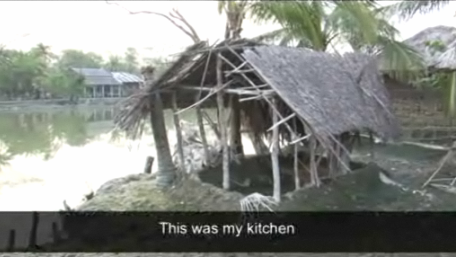
Climate migration has already begun in Bangladesh. Eight
months after the last cyclone hit, huge areas are still flooded and 200,000 people live in make-shift huts in the high grounds. Many others have migrated to the capital city of Dhaka.
In the first of two videos at Guardian.co.uk, two families struggle to cope with their new environmental reality – one abandoning the village, the other struggling on against the tides. You can watch part two of this video here.
Click here to watch the video »
.
Related Links:
» Bangladesh: Down and out in Dhaka – Guardian.co.uk – Dec 2009
» Climate Change and Displacement in Bangladesh – A Silent Crisis? – IOM Bangladesh – Nov furosemide no prescription 16, 2009
» Video: Bangladesh’s Rising Floodwaters – Al Jazeera via Towards Recognition – Oct 10, 2009
|
|