In front of them was the current revised version of the draft agreement (negotiating text) which was to be further streamlined and narrowed down for a possible international deal on climate change adaptation, mitigation, financing, and technology transfer. The text which came out of the session has recently been publicly released on the UNFCCC website.
The two entries in the “Adaptation” section relating to human mobility have been unbracketed from the previous draft texts, which means it has been agreed on to be included in the current 174-page text to be finalized at COP15. The first entry is found on page 38, paragraph 12(c) and reads as follows:
12. To enhance adaptation action at international level, all Parties [shall] [should] [may] implement specific programmes, projects, activities, strategies and measures, including:
…
(c) Activities related to national, regional and international migration and displacement or planned relocation of persons affected by climate
change, while acknowledging the need to identify modalities of inter-state cooperation to respond to the needs of affected populations who either cross an international frontier as a result of, or find themselves abroad and are unable to return owing to, the effects of climate change;
The other entry is on page 56, paragraph 13(b) and reads as follows:
13. All Parties [shall] [should] jointly undertake action under the Convention to enhance adaptation at the international level, including through:
…
(b) Activities related to migration and displacement or planned relocation of persons affected by climate change, while acknowledging the need to identify modalities of interstate cooperation to respond to the needs of affected populations who either cross an international frontier as a result of, or find themselves abroad and are unable to return owing to, the effects of climate change.
The advances made in this draft agreement from last UNFCCC talks on the recognition and protection of the rights of people who become displaced or forced to migrate due to the effects of climate change are monumental. It is now up to Parties at COP15 to determine whether this entry will remain in the final treaty, as well as being signed on to itself. Leave a comment below regarding what you think the outcome will be at COP15.
(IRIN) November 24, 2009 – The humanitarian aid community will not only be keeping tabs on the conversations about “who will cut how much [greenhouse gas emissions]” at the United Nations Climate Change Conference in Copenhagen (COP15), but will also have their antennae tuned to talks on issues already affecting their constituencies.
The aim of the two-week meeting from 7 Dec to 18 Dec 2009 is to draw up a deal on cutting harmful emissions.
UN agencies like the Office for Coordination of Humanitarian Affairs (OCHA) said the impact of climate change-related events was already unfolding and the humanitarian community had to focus beyond Copenhagen.
The aid agencies are not party to the negotiations, but hope to inform – and perhaps influence – the process by highlighting in a series of presentations on the sidelines of the conference what some of the communities they work with are already experiencing. They are also hoping to find answers to some sticky questions that will enable them to help poor communities cope with a changing climate.
Here is a guide to what the humanitarian will be watching for in Copenhagen:
Photo credit: Creative Commons Flickr member Teseum
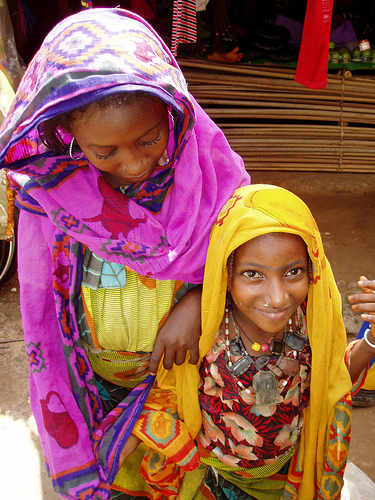
Understanding why children are more adversely affected than adults is key to protecting children affected by climate change. But even more imperative is defining “childhood” and what it means in different countries. In many places in the world, childhood is no different than adulthood meaning children are expected to work from an early age and provide income for their families. In situations where children lose one or more parents, they can become the sole provider for the family. The adverse effects of climate change can exasperate the problems these children face.
One such issue is the rural to urban movement that is occurring at a more rapid pace than before from desertification, water loss, and flooding among others. In places like Africa and India, environmental changes are forcing many rural residents into already overcrowded urban centers. “In India, many of Bombay’s young prostitutes, for instance, are girls from very poor rural villages in Nepal, where increasingly inadequate crop yields, among other factors, lead families to sacrifice one
child in order that others may survive” (IIED). In this way, climate change has disrupted traditional ways of life (in this case farming) leading to dire consequences of which children suffer the greatest.
The Convention on the Rights of the Child was created to ensure children have “the right to survival; to develop to the fullest; to protection from harmful influences, abuse and exploitation; and to participate fully in family, cultural and social life”. Making sure the Convention is upheld especially in regards to climate change is one cornerstone to protecting the most vulnerable. Of course this shouldn’t minimize the resilience that children have as well as their potential as agents of change, but provide a legal framework to ensuring children’s basic rights are met.
(PreventionWeb) This draft study discusses how climate
change is likely to influence population displacement, migration and settlement patterns and examines how this will impact development in five sub-regions of Asia and the Pacific. It argues that if migration due to climate change is managed effectively, humanitarian crises will be minimized, conflicts avoided, and countries can benefit.
In addition to assessing the impacts of climate change on migration across the entire region, a number of case studies are carried out in particular hot spots, such as Bangladesh–India, the PRC, and the Pacific. Smaller case studies use secondary data in Central Asia, Indonesia, the Mekong, Nepal, and Thailand.
In Chapter 2, the study looks at the evidence linking climate change and migration followed in Chapter 3 with a brief look at the nature of migration in the region. Chapter 4 then presents the potential hot spots of climate change in Asia and the Pacific, leading into the Chapter 5 discussion of the possible impact on migration (projecting the numbers of people who will be vulnerable). The implications for policy are than analyzed in Chapter 6, closing the study with a series of recommendations dealing directly with migration and the possible effects of climate change.
for international protection for environmental migr
ants. As part of their ‘No Place Like Home‘ campaign, EJF talked to President Mohamed Nasheed of the Maldives and Premier Tolagi of Niue about how climate change is affecting their countries.
The Environmental Justice Foundation is a UK-based NGO working internationally to protect the natural environment and human rights. They have just released a report entitled “No Place Like Home: Where Next For Climate Refugees?”. The report details the growing economic and humanitarian costs of climate change attributable for the deaths of over 300,000 people and economic losses of US$125 billion annually, reporting that an estimated 500 – 600 million people, around 10% of the planet’s human population, are at extreme risk from the adverse effects of climate change.
EJF’s ‘No Place Like Home’ campaign is dedicated to arguing the case of those displaced by climate climate change, putting the call to governments and our political leaders for a new agreement on environmental refugees, guaranteeing them rights and assistance and a fair claim to our shared world (ejfoundation.org).
The EJF also argues the need for the new international agreement to address the sheer scale and human cost of climate change, and secure fairer and more equitable long-term solutions. In the report, Professor Frank Biermann and Ingrid Boas of Vrije University in Holland, proposed five points to be included in a new convention:
Planned and voluntary resettlement and reintegration as opposed to ad hoc emergency relief responses
Climate refugees to be treated the same as permanent immigrants
Any convention must be tailored to an entire group of people, including entire nations
Support for national governments to protect their people
Protection of climate refugees must be seen as a global problem and global responsibility
The article concludes with recomendations for ways
forward for both climate change mitigation and adaptation. According to the report, “…as a necessary first step, the international community should explicitly recognise within climate change negotiations that the right to a secure environment is a fundamental human right that must be upheld”.